Mortars and Building Materials Laboratory – Lab 68
Lab 68 is a facility which specializes in the research, development, characterization, and performance assessment of modern, traditional and innovative materials for architectural conservation, renovation, building and construction purposes.
The main topics covered include chemical, physical and mechanical characterization and testing of building materials, along with accelerated aging tests (physical and electrochemical) for assessing durability of porous building materials (according to EN standards and RILEM technical recommendations). Lab68 is also equipped with a wide range of diagnostic tools (Schmit and Pendulum, IR-Thermography, Kursten Tubes, core-drilling, half-cell potential, spectrophotometry, selective electrodes etc.) for supporting field surveys of historic buildings and concrete structures.
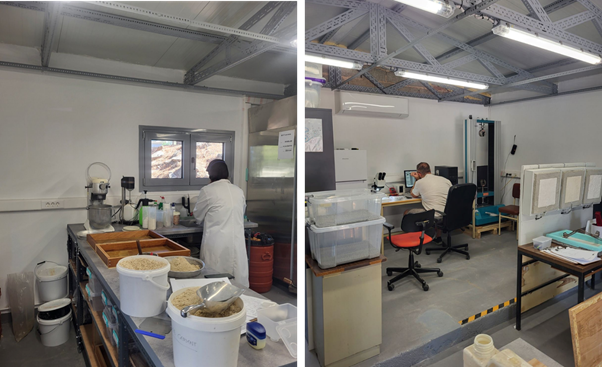
Main equipment and apparatus:
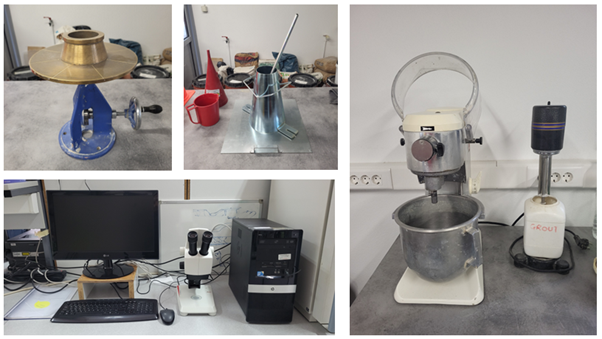
- Benchtop planetary mortar mixer (Capacity: 5 l)
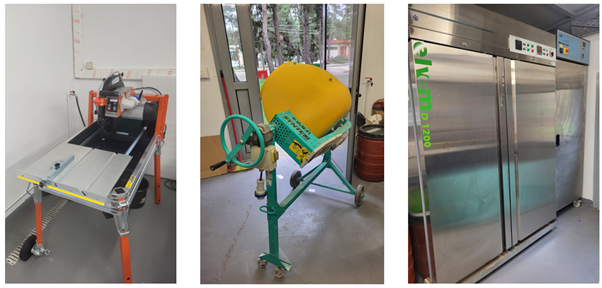
- Portable Electric Concrete/ mortar mixer (Capacity: 40 l)
- Electomagnetic Sieve Shaker (Matest A059-KIT)
- Stereo-microscopes (Leica EZ4 E)
- Thermal Imaging Camera (FLIR E-53)
- Electrochemically accelerated testing equipment and devices
- US velocity equipment
- Schmidt Rebound Hammer ( Schmidt OS-120 Pendulum hammer for lightweight concrete, mortars etc.)
- Schmidt Rebound Hammer for concrete (Original Schmidt OS8000)
- Curing chambers for cementitious materials, with humidity & temperature control (ELVEM)
- Grinding and Polishing Equipment for petrographic sample preparation
- Universal Testing Machine (Max capacity: 50 KN)
- Flow table apparatus for mortars and concrete
- Vicat apparatus
- Le Chatelier apparatus
- Masonry circular table saw (Saw blade diameter 400mm)
- Masonry circular table saw for specimens (Saw blade effective length 70mm)