ABOUT
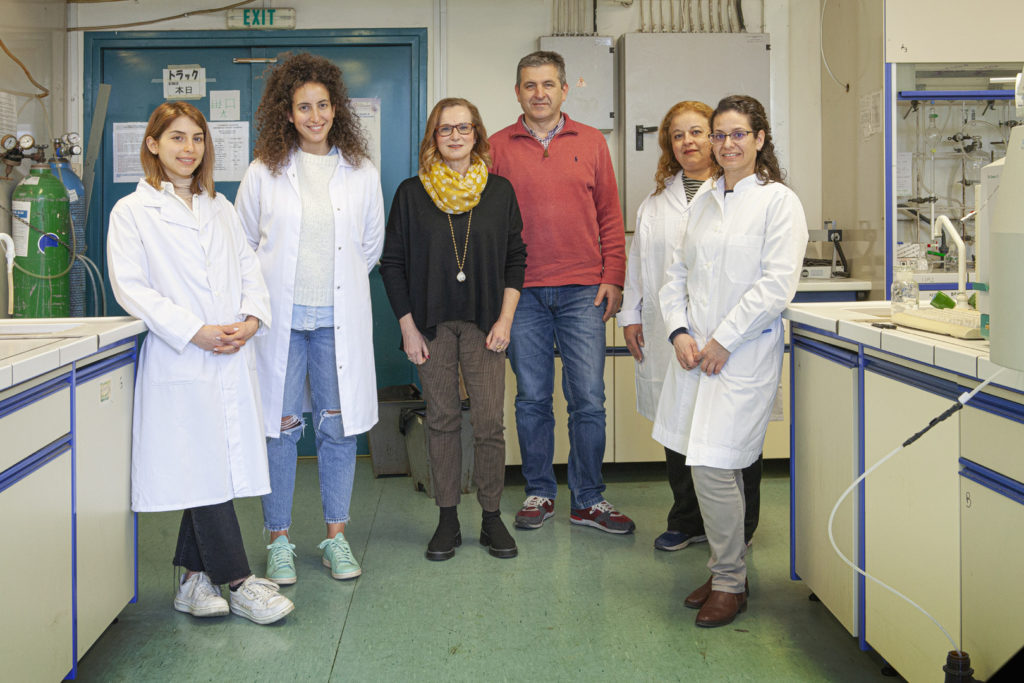
The Photo-Catalytic Processes and Environmental Chemistry Group conducts advanced research at the intersection of analytical chemistry, environmental science, and public health. Our core expertise lies in developing sophisticated analytical workflows to detect, trace, and structurally elucidate complex chemical profiles across highly diverse and challenging matrices.
By prioritizing high-level instrumental analysis and rigorous quality control standards (ISO 17025 accreditation), our multidisciplinary approach addresses critical knowledge gaps in environmental monitoring, exposure assessment, and water & soil management.
Core Technological Expertise:
- Mass Spectrometry & Non-Targeted Analysis
The technological foundation of our group is driven by state-of-the-art mass spectrometry. We utilize comprehensive platforms—including GC-MS, LC-MS/MS, and high-resolution mass spectrometry (such as Orbitrap and qTOF)—coupled with advanced computational data-mining workflows. Our group is actively expanding the boundaries of mass spectrometry-based metabolomics and non-targeted analysis (NTA). We specialize in generating robust MS spectral fingerprint libraries, characterizing structural variants, and overcoming analytical challenges posed by the chemical diversity of natural and synthetic compounds of emerging concern (CECs).
Applied Research Domains: We leverage our MS-based metabolomics and targeted analytical capabilities across a variety of critical research areas. Current investigative examples include:
- Microbial metabolites & toxins: Employing HRMS to identify multi-class microbial metabolites such as those produced by microalgae and cyanobacteria, focusing on bioactive compounds and toxins. This includes assessment of their environmental fate via structural elucidation of their transformation products.
- Orthodontic & dental materials: Utilizing NTA and metabolomics workflows to identify and quantify complex chemical leachables emerging from modern orthodontic appliances, providing critical data for exposomics and human health risk assessments.
- Energetic materials & explosives: Developing highly precise analytical methodologies for the determination and profiling of explosives in complex environmental matrices to support the remediation of contaminated sites.
- Volatile & odor-active compounds: Applying GC-MS-Olfactometry to profile volatile emissions from microalgae biomass, determining their sensory and chemical impacts on water systems and microalgae-based food products.
- Advanced Oxidation/Reduction Processes and Water & Soil Remediation
To combat the increasing prevalence of emerging pollutants, the group also investigates Advanced Oxidation/Reduction Processes (AOPs/ARPs), including UV photolysis, UV/chlorine, sonolysis, gamma radiolysis, and photocatalysis.
We focus on filling critical knowledge gaps regarding Reactive Species (RS)-driven reaction pathways and transformation products (TPs). By evaluating multiple AOPs/ARPs at environmentally relevant concentrations in environmental matrices, we aim to elucidate the molecular-level interactions, reaction mechanisms, and transformation products of less-studied cyanotoxins and taste/odor compounds. Through this integrated approach—spanning from fundamental molecular chemistry to practical decontamination technology—the group makes significant advances in basic science, public health and safety, environmental policy, and water & soil treatment technologies.
- Collaborations & Partnerships
We are highly focused on expanding our collaborative networks. We actively welcome partnerships with academic researchers, regulatory bodies, and industry professionals seeking advanced expertise in mass spectrometry-based metabolomics, non-targeted analysis, and complex matrix profiling. Whether applied to environmental chemistry, clinical exposure studies, or materials science, our group provides the analytical rigor and technological infrastructure required to elucidate complex chemical systems.