Chemical Safety Assessment of Orthodontic Materials
As clear aligner therapies (such as 3D-printed resins and commercial aligner systems) undergo a global surge in popularity, understanding the nature and quantity of substances released into the oral cavity has become vital for safeguarding patient health. To investigate the chemical stability, monomer leaching profiles, and biocompatibility of modern orthodontic appliances, our group develops and deploys robust targeted and non-targeted mass spectrometry methodologies:
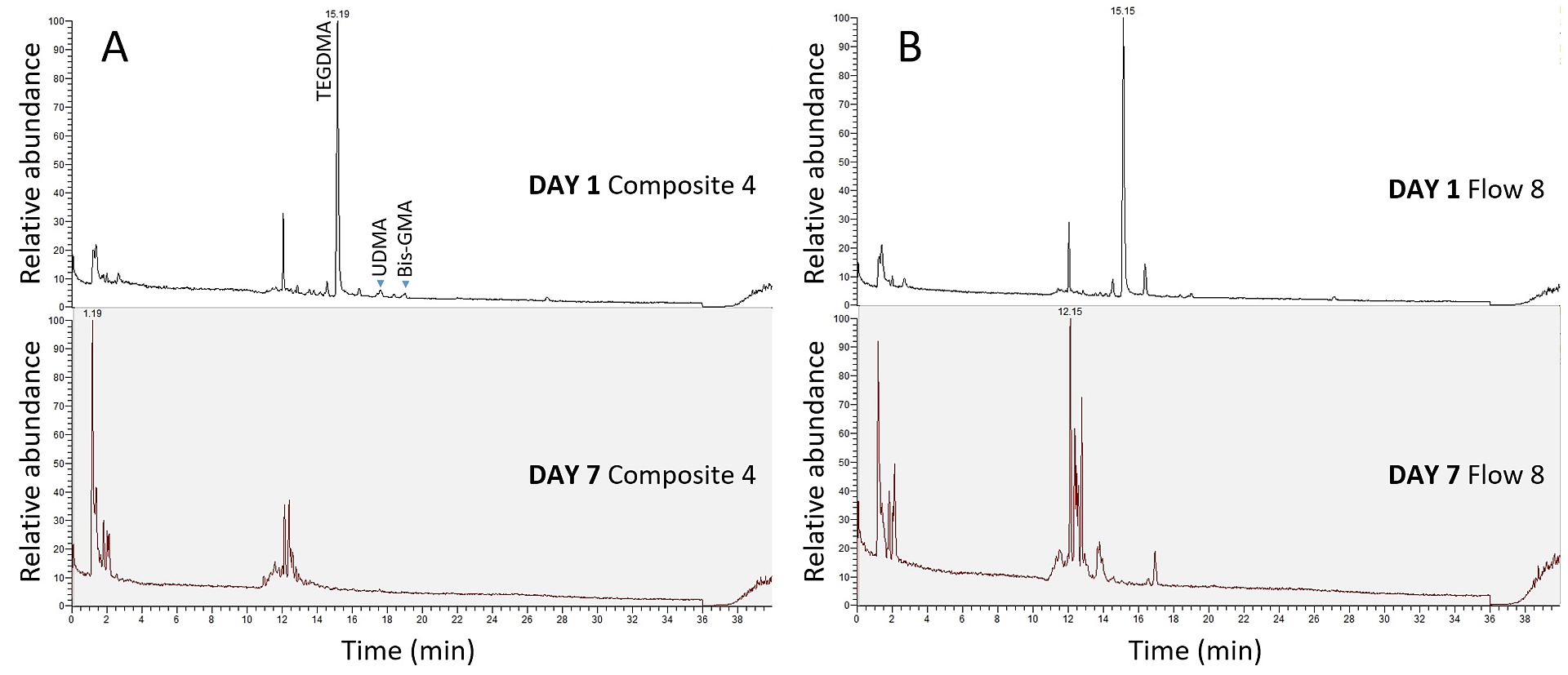
a) High-Sensitivity Targeted Analysis (LC-MS/MS): Developing highly sensitive workflows to identify and quantify trace-level eluent monomers such as Bis-GMA, UDMA, TEGDMA etc., potential impurities, and endocrine-disrupting transformation products such as Bisphenol-A (BPA).
b) Suspect & Non-Targeted Screening (LC-HRMS): Utilizing high-resolution workflows to screen for suspect and unknown compounds, enabling the structural elucidation of complex degradation products and photo-initiator residues.
c) In Vitro Simulated Degradation Methodologies: Evaluating compound leaching from 3D-printed aligners and composites, and tracing the dynamics of monomer release under simulated mechanical wear and clinical stress.
d) In Vivo Clinical Biomarker Tracking: Performing trace chemical analysis on complex biological matrices to validate how real-world intraoral conditions impact patient chemical exposure levels.
Images